JRI-Poland Book Club – Third Selection
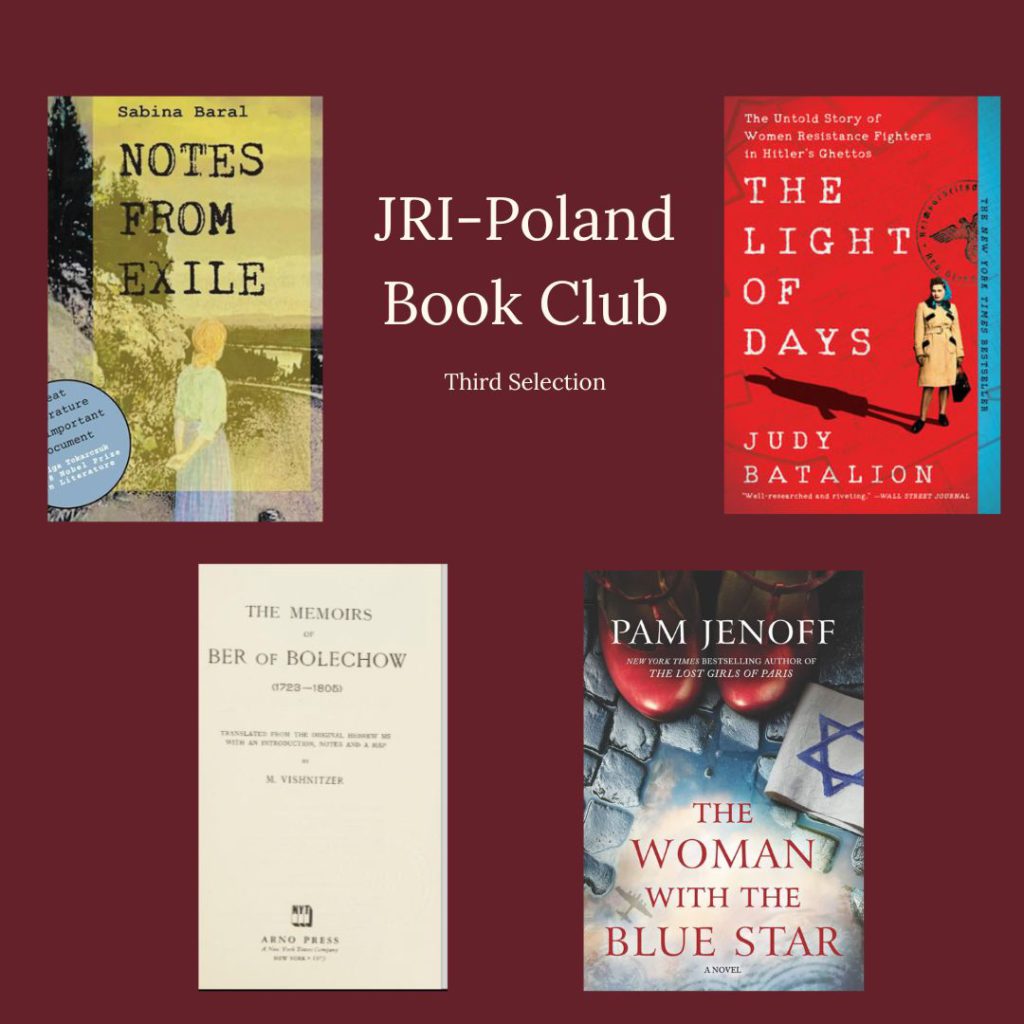
Our community is growing! The JRI-Poland Book Club is excited to announce the four candidates for our third selection. We invite all our readers to help us choose our next journey into Jewish history and culture by participating in the poll below. The book choices will be as follows:
- Notes from Exile by Sabina Baral (Non-Fiction History)
- The Light of Days by Judy Batalion (Non-Fiction History)
- The Memoirs of Ber of Bolechow 1723-1805 by Dov Ber Birkenthal (Genre: Memoir)
- The Woman with the Blue Star by Pam Jenoff (Genre: Historical Fiction)
Check the JRI-Poland Community Forum to participate in the vote for the next selection. All JRI-Poland readers are invited to help select the book; however, only JRI-Poland dues paying members (a dedicated $54 annually for that purpose) can attend the JRI-Poland Book Club meetings. Meetings are moderated by Hadassah Lipsius and Judy Baston and often feature the author of the selected book, when possible.
Votes can be submitted at the corresponding community forum post: https://forum.jri-poland.org/t/time-to-vote-for-our-next-jri-poland-book-club-pick/21960
Notes from Exile by Sabina Baral – (Genre: Non-Fiction History)
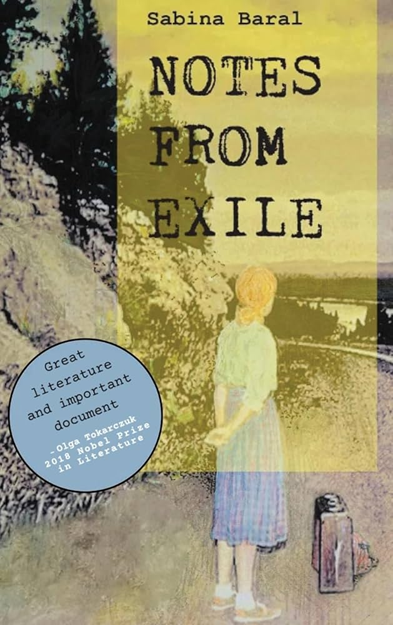
In 1968, the communist regime in Poland unleashed a state-sponsored antisemitic campaign, leaving Jewish families—who were all Holocaust survivors—with no further prospects for life in Poland. Sabina Baral, a 20-year-old student at the time, chronicles her family’s harrowing journey as they were stripped of their citizenship, uprooted from their home, and thrust into an uncertain world. While Poland was fraught with xenophobia and hate, the reception in other countries offered a more welcoming respite.
Baral’s deeply personal narrative goes beyond displacement to capture the emotional weight of being labeled “unwanted,” the profound challenges of forced emigration, and the unyielding hope for dignity and belonging. From bittersweet goodbyes in Poland to long stopovers in Vienna and Rome, her story reflects the universal struggles of immigrants navigating systemic oppression, cultural dislocation, and prejudice.
This is not a Holocaust memoir, but rather a generational memoir that examines the enduring impact of antisemitism over time. Burdened by the trauma of Holocaust survival, Baral sheds light on the scars left by systemic hatred, offering an intimate portrait of the human cost of bigotry and exclusion.
Already a celebrated literary success in Poland, with six editions and acclaimed adaptations for theater and television, Notes from Exile transcends its origins to touch hearts worldwide. This English edition invites readers of all backgrounds—Jews and non-Jews alike—to reflect on the resilience of those who have endured exile and to draw timeless lessons from history’s profound narratives.
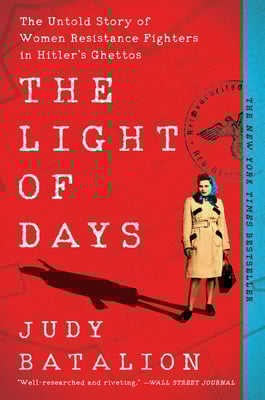
The Light of Days – The Untold Story of Women Resistance Fighters in Hitler’s Ghettos by Judy Batalion (Genre: Non-Fiction History)
Witnesses to the brutal murder of their families and neighbors and the violent destruction of their communities, a cadre of Jewish women in Poland—some still in their teens—helped transform the Jewish youth groups into resistance cells to fight the Nazis. With courage, guile, and nerves of steel, these “ghetto girls” paid off Gestapo guards, hid revolvers in loaves of bread and jars of marmalade, and helped build systems of underground bunkers. They flirted with German soldiers, bribed them with wine, whiskey, and home cooking, used their Aryan looks to seduce them, and shot and killed them. They bombed German train lines and blew up a town’s water supply. They also nursed the sick and taught children.
Yet the exploits of these courageous resistance fighters have remained virtually unknown.
Joining Renia are other women who served as couriers, armed fighters, intelligence agents, and saboteurs, all who put their lives in mortal danger to carry out their missions. Batalion follows these women through the savage destruction of the ghettos, arrest and internment in Gestapo prisons and concentration camps, and for a lucky few—like Renia, who orchestrated her own audacious escape from a brutal Nazi jail—into the late 20th century and beyond.
NPR’s Best Books of 2021
National Jewish Book Award, 2021
Canadian Jewish Literary Award, 2021
The Memoirs of Ber of Bolechow 1723-1805 by Dov Ber Birkenthal (Genre: Memoir)
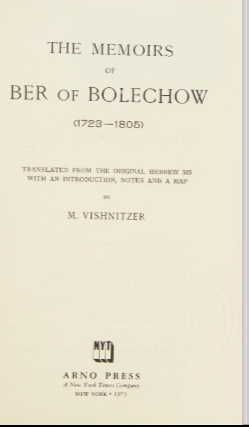
A rare and vital window into 18th-century Jewish life, this selection offers a first-hand account of the joys and struggles of the Jewish community in Galicia.
This work is in the “public domain in the United States of America, and possibly other nations. https://www.sas.upenn.edu/~cavitch/pdf-library/Ber_of_Bolechow_Memoirs.pdf
Dov Ber Birkenthal (1723–1805), also known as Ber of Bolechow, was a Hebrew writer from Bolekhiv whose memoirs provide an important insight into 18th century Jewish European life. He served as interpreter and advisor to the chief rabbi of Lemberg in his debate against Jacob Frank in 1759. Birkenthal was born on March 13, 1723, in Bolechow, Galicia. He was the son of a wine merchant. In addition to a traditional Jewish education, he was sent by his father to study Greek and Latin with the local priests, so that as an adult, he was fluent in Polish, German, Italian, Hebrew, Greek and Latin.
The book Memoirs of Ber of Bolechow is a first-hand testimony about life in Bolochow in the 18th and early 19th centuries. In his book, Birkenthal writes about his life, politics and the troubles of his wine business, and makes scholarly references to verses from the Bible. Birkenthal also writes about riots, robberies, violence and murder committed by the Ukrainians from time to time. The book was edited in the 20th century by Mark Wischnitzer, in a bilingual edition, Yiddish and Hebrew. Wischnitzer added an introduction in which he told about the history of Bolechow and the life of the Jews there.[4]
The Woman with the Blue Star by Pam Jenoff (Genre: Historical Fiction)
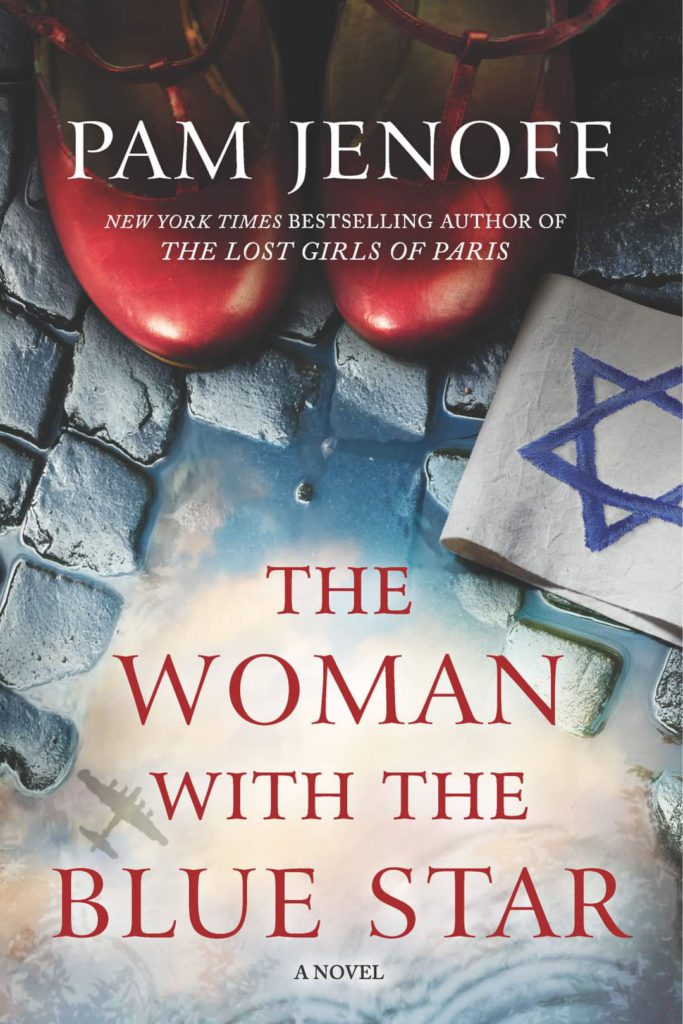
1942. Sadie Gault is eighteen and living with her parents in the Kraków Ghetto during World War II. When the Nazis liquidate the ghetto, Sadie and her pregnant mother are forced to seek refuge in the perilous tunnels beneath the city. One day Sadie looks up through a grate and sees a girl about her own age buying flowers.
Ella Stepanek is an affluent Polish girl living a life of relative ease with her stepmother, who has developed close alliances with the occupying Germans. While on an errand in the market, she catches a glimpse of something moving beneath a grate in the street. Upon closer inspection, she realizes it’s a girl hiding.
Ella begins to aid Sadie and the two become close, but as the dangers of the war worsen, their lives are set on a collision course that will test them in the face of overwhelming odds. IInspired by incredible true stories, Jenoff weaves a gripping narrative of two strangers—one hiding in the sewers, one living in affluent safety—whose lives collide in a testament to the human will to survive..
See review https://www.hadassahmagazine.org/2021/10/11/woman-blue-star-review/
Votes can be submitted at the corresponding community forum post: https://forum.jri-poland.org/t/time-to-vote-for-our-next-jri-poland-book-club-pick/21960